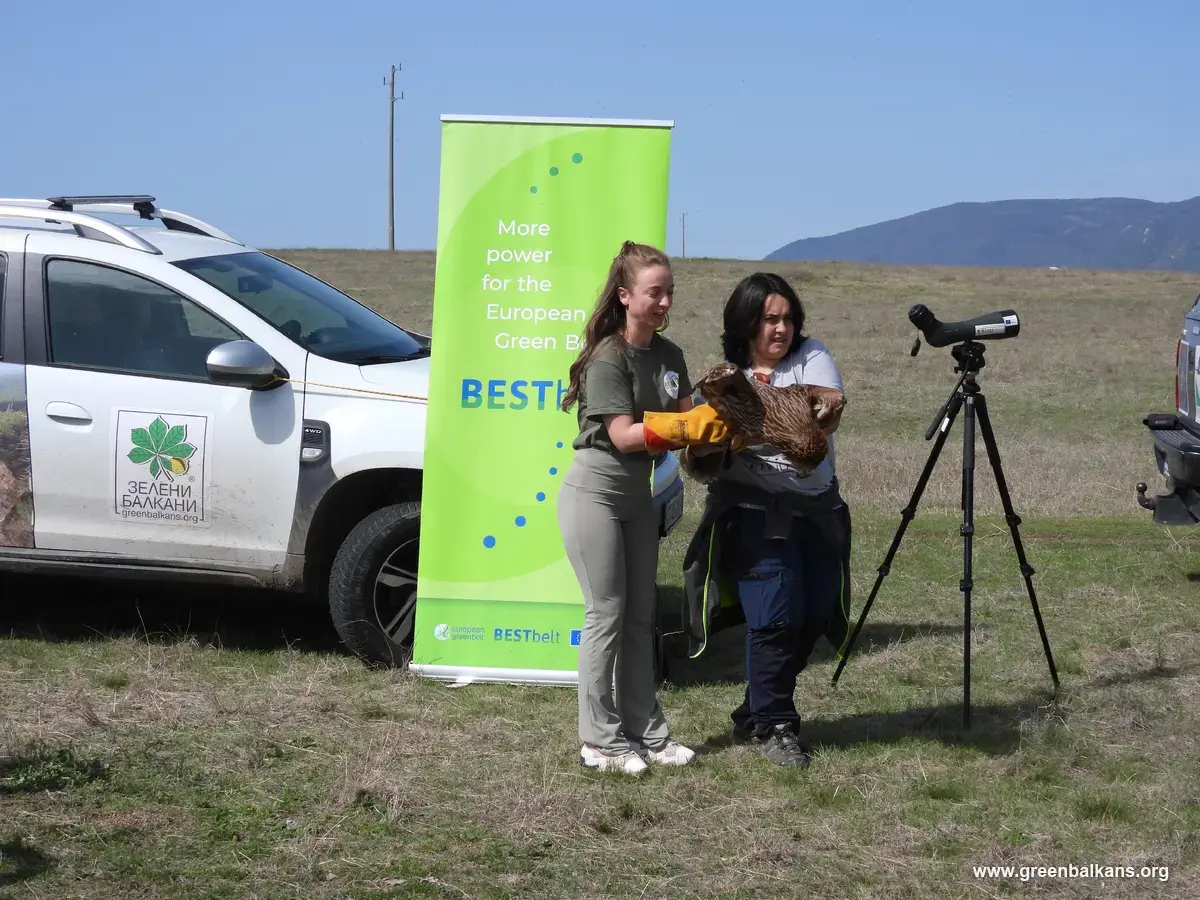
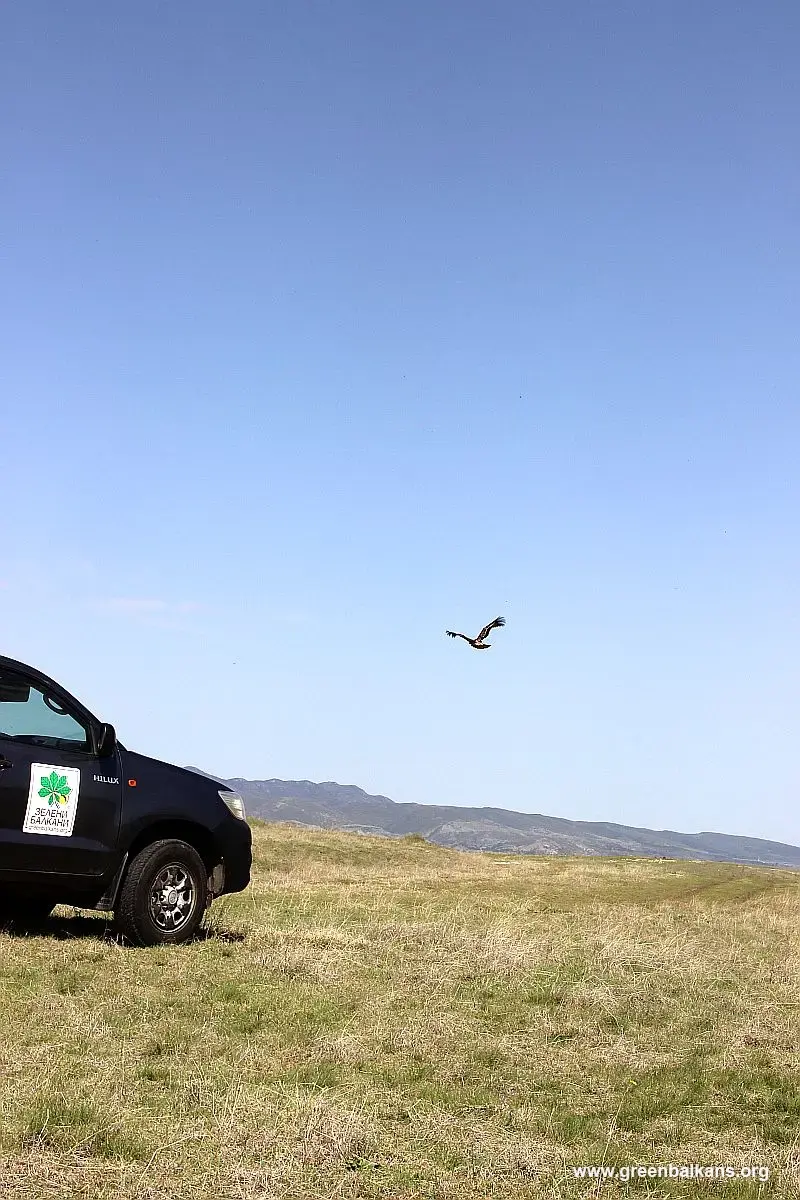
In the past week the team of the Wildlife Rehabilitation and Rescue Centre – Stara Zagora of Green Balkans released back into the wild another Imperial Eagle, successfully rehabilitated in the Centre's aviaries.
To trace the further adaptation of the eagle to natural conditions in the wild, he was equipped with a satellite transmitter provided by project BESTbelt, implemented by Green Balkans and funded by the European Union, in partnership with the Turkish organization “Back to Nature” and the German foundation EuroNatur.
The device will transmit data on both the bird’s status, situation and various threats – poaching, presence of poison baits, disturbance, etc. The data will be useful in implementing direct conservation activities, not only in relation to the specific specimen, but also for other birds of this species, аs well as a number of rare and protected birds.
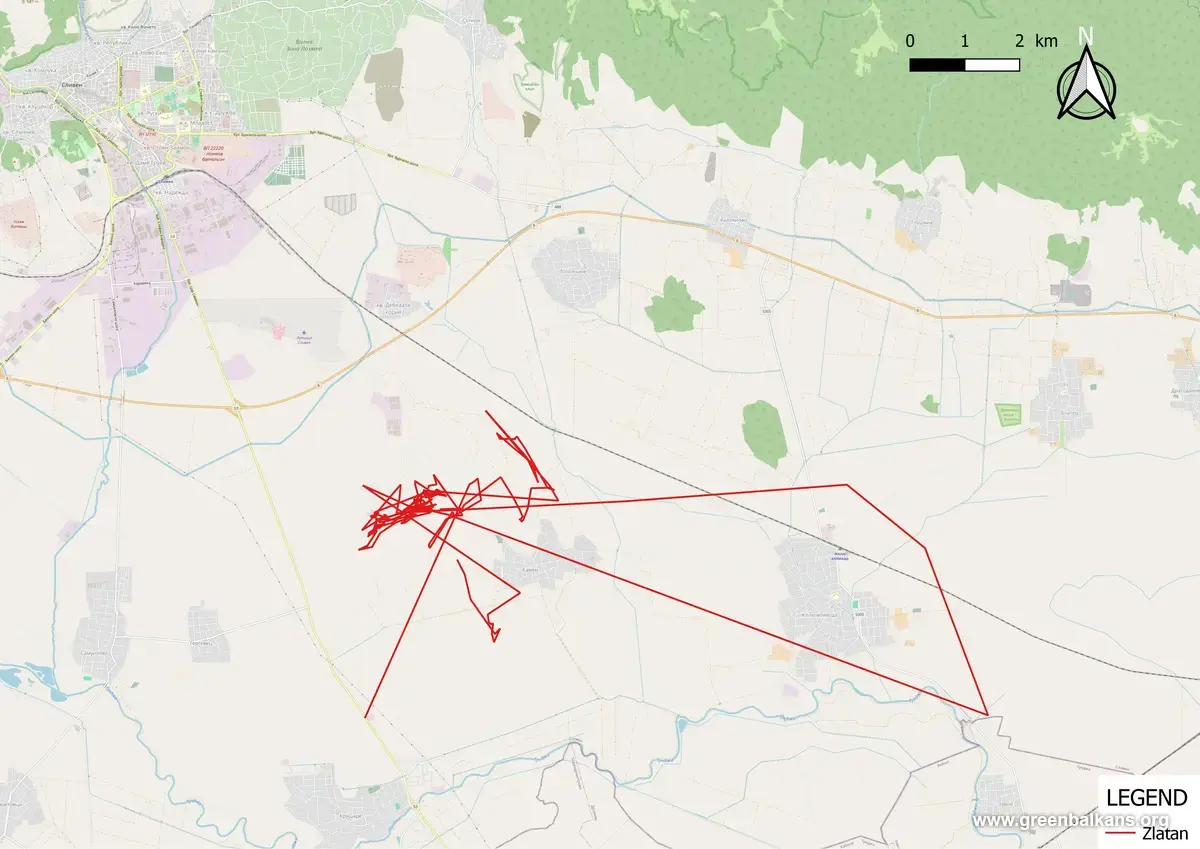
The initial data from the tagged eagle are encouraging and show the successful adaptation in the first few days of the independent life of the rare bird (see map below).
The young Imperial Eagle released in the wild is about one year old. He enters the Wildlife Rehabilitation and Rescue Centre in the summer of 2024, as a little chick in fluffy feathers, stunted in its growth and in a helpless state. For almost a year, the bird received specialized care and rehabilitation from the team of Green Balkans. For its successful adaptation the eagle was initially kept in an adaptation aviary, in the cage of a pair of Imperial Eagles kept at the Rescue Centre.
This spring it was decided to release it back into the wild. The so-called “delayed release” approach has been chosen, in which young and inexperienced specimen are raised in artificial conditions during their first year of life, and only the following year are released into the wild. In this way rare birds are protected from the many dangers and threats, with which the young specimens encounter in nature at the beginning of their independent life.
This methodology is innovative for our country in terms of this species and has been purposefully developed by the team from Green Balkans to increase the handling of young Imperial Eagles undergoing treatment. In the past year two other juvenile Imperial Eagles, rehabilitated at the Green Balkans Rescue Centre were released into the wild with this approach, and the initial results are quite promising. Both birds manage to form pairs and occupy breeding territories in different parts of our country, but unfortunately one of them died because of a collision with an unsafe power pole. This is also one of the most common threats for young eagles.
the Wildlife Rehabilitation and Rescue Centre of Green Balkans is the largest and most specialized structure for treatment and reproduction of Imperial Eagles not only in Bulgaria, but also on the Balkan Peninsula. Over the years more than 20 specimens of the rare and magnificent birds have been released into the wild after receiving qualified assistance at the Centre.