A young Saker Falcon, released by Green Balkans, was found dead near Burgas - the bird was located thanks to the GPS transmitter mounted on its back.
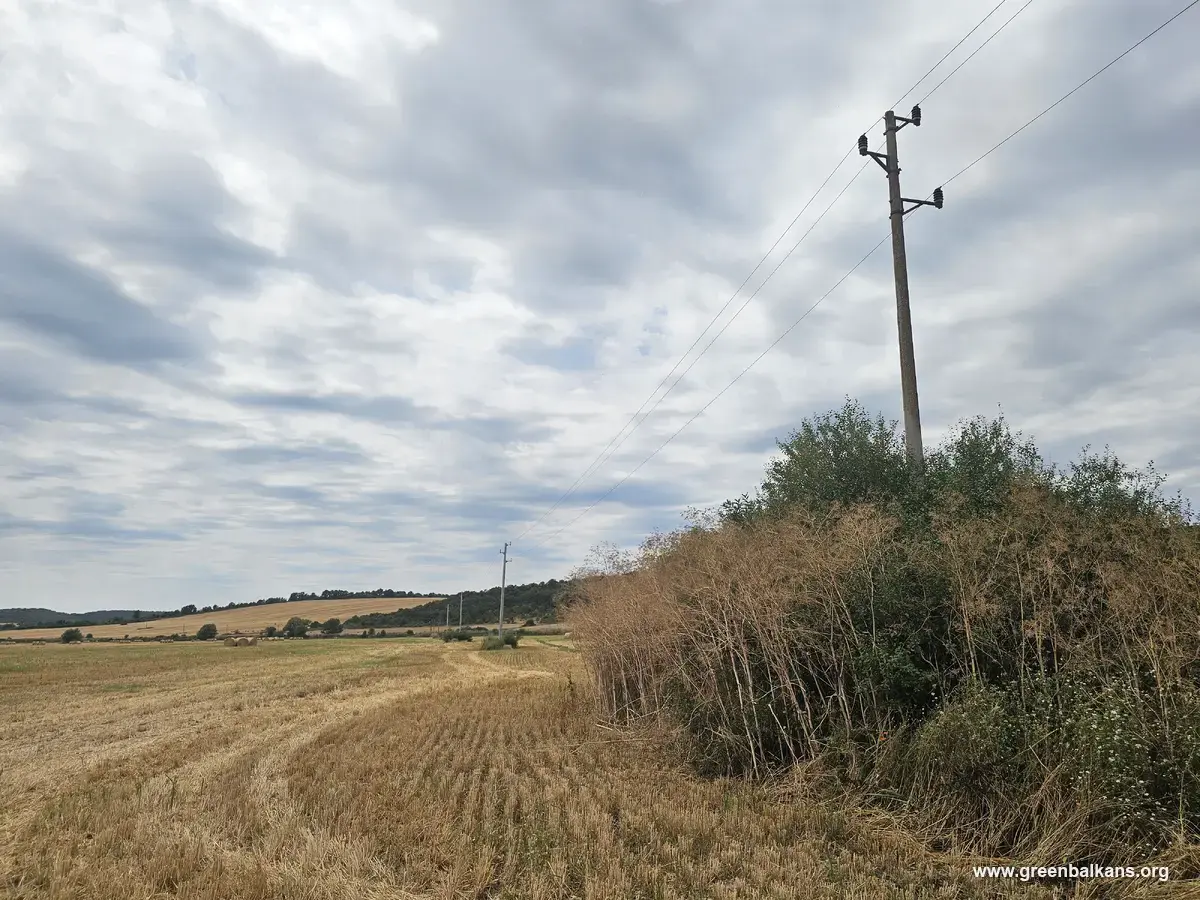
The falcon’s body was discovered beneath one of the most dangerous types of electricity pylons for birds of prey, along with the body of a Long-eared Owl. The data from the transmitter indicated that the falcon died during the night, with the likely cause being a conflict between the two birds, leading to contact with the power lines and a fatal outcome.
After the falcon was brought to the clinic of the Wildlife Rehabilitation and Breeding Centre of Green Balkans, veterinary experts performed a necropsy, which unequivocally confirmed that the cause of death was electrocution.
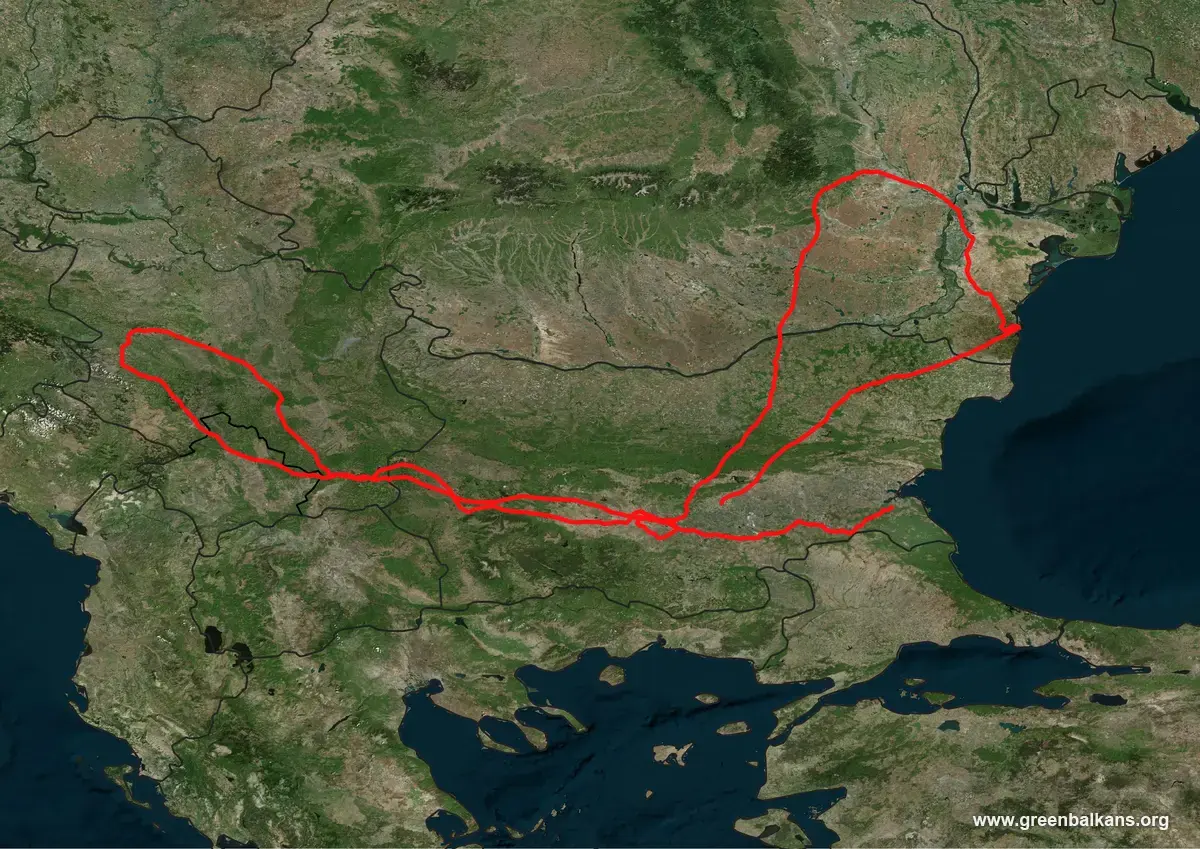
The falcon was one of eight hatched this year in the aviaries of the Centre and released into the wild as part of our organisation’s efforts to restore the Saker Falcon population in Bulgaria. The bird was identified as male. It was released from an adaptation aviary on July 2, 2025. It remained in the area of its release for 26 days before beginning its dispersal journey through Romania, back through Bulgaria, then into Serbia and Kosovo, and again returned to Bulgaria. Tragically, it died at less than three months old. All this information became known thanks to the GPS transmitter, kindly provided by the team of the Life for Falcons project.
The use of such modern technologies gives us not only the opportunity to track the lives of the birds we release but also to identify the dangers they face in the wild.
Unfortunately, this young falcon did not survive to breeding age. However, its death has pointed us to a “hotspot” that is likely responsible for the deaths of many other birds as well. The Green Balkans team will report the case to the competent authorities and will monitor the retrofitting of this hazardous section of the power grid.
Sadly, cases like this are not rare. With the help of new technologies and the ability to determine the cause of death of birds marked with transmitters, it has become clear that in addition to poisoned baits and poaching, the power grid is one of the most frequent causes of premature death among birds of prey.
We remind everyone that Green Balkans has been working for more than 15 years on the restoration of the Saker Falcon population in Bulgaria. Thanks to our efforts, the species has returned to the country, and from 0 pairs in the wild, we now have three confirmed breeding pairs. Over 90% of the birds from these wild pairs were hatched in the Rescue Centre and released as part of our reintroduction activities, while the rest were donated by zoos or breeding centres. Sadly, this young falcon never got the chance to live and raise offspring. But its death will not be in vain—it will help save many other feathered lives.
We thank our colleagues Vladimir Mladenov, Ivaylo Dimchev, and Desislava Dimcheva from the Bulgarian Society for the Protection of Birds, as well as Konstantin Popov from Green Balkans, for their quick response, and our friend and raptor advocate Cornel Cotorogea for the support he provided during this unfortunate incident.
Electrocution killed a juvenile Saker Falcon

24.07.2025
-
 ...
-
 ...
-
 ...
-
 ...