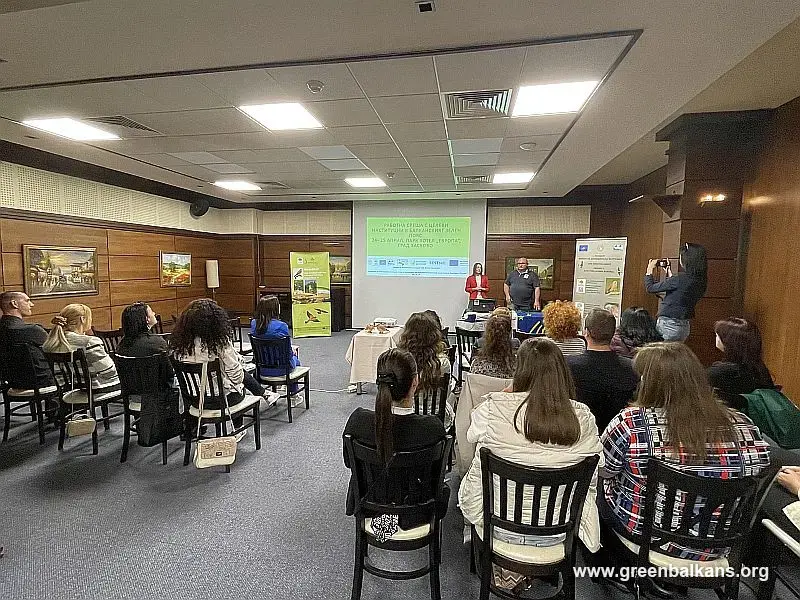
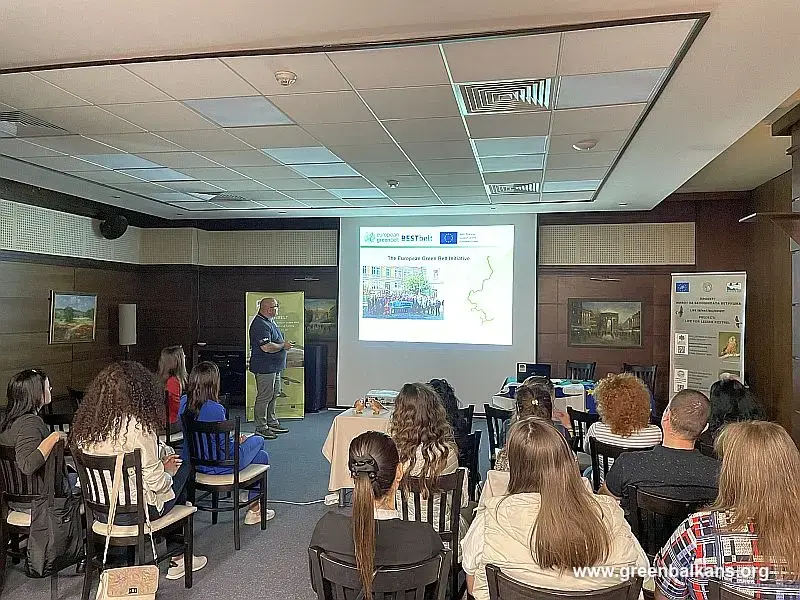
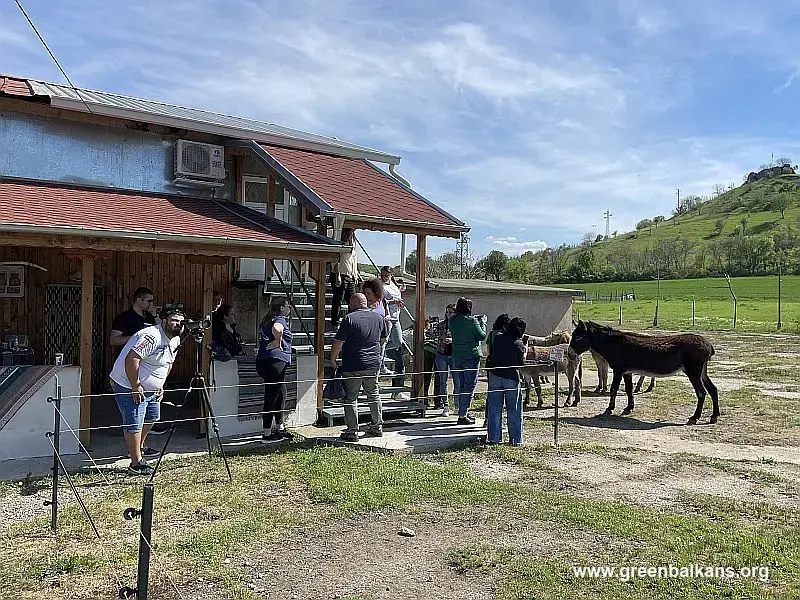
The event took place at the end of last week in Haskovo. The District Governor of Haskovo Region, Dr. Stefka Zdravkova, welcomed the participants.
Experts from Regional Inspectorate of Environment and Water (Haskovo, Stara Zagora, Plovdiv, Smolyan, Burgas), municipal ecologists, representatives of nature parks, NGOs (such as the Society “Nature Park Sakar”), universities, and others took part in the initiative. A special focus was placed by the organizers from Green Balkans on the international project BESTbelt, implemented in partnership with the Turkish organization “Back to Nature” and the German foundation EuroNatur, funded by the European Union. The project aims to conserve rare bird species such as the Imperial Eagle and the Lesser Kestrel in the border regions of Bulgaria and Turkey, which are part of the European Green Belt initiative. A significant portion of the project activities are aimed at the Haskovo region, whose border areas with Turkey and Greece represent key sites of international ecological importance.
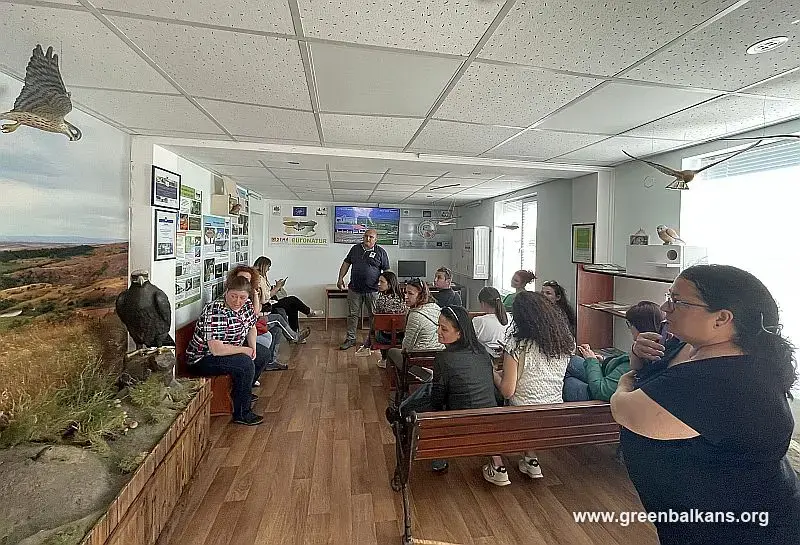
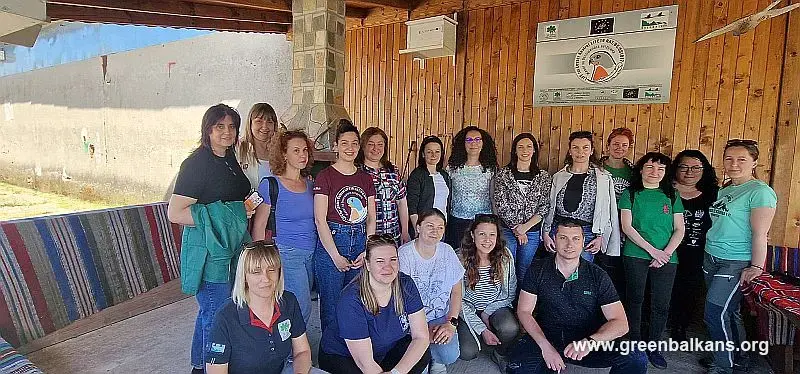
Participants also had the opportunity to visit one of the most successful nature conservation projects in Bulgaria — “Life for Lesser Kestrel” LIFE19 NAT/BG/001017, implemented by Green Balkans, funded by Programme of the EU. It is worth noting that thanks to the efforts of the conservation organization and its partners, the Lesser Kestrel has been restored as a breeding species in Bulgaria, after having long been considered extinct as a nesting bird in the country. This remarkable success has been achieved in the Sakar Mountain, which is part of the European ecological network Natura 2000. On-site, the hosts presented to their guests the methods and approaches used by the team in the challenging task of bringing back a bird species once extinct from Bulgarian nature.
Last but not least, particular interest among the participants was drawn by the group of donkeys, which have the important role of grazing the area around the Lesser Kestrel colony to maintain low grass levels, ensuring clear visibility for the birds to spot their prey.