

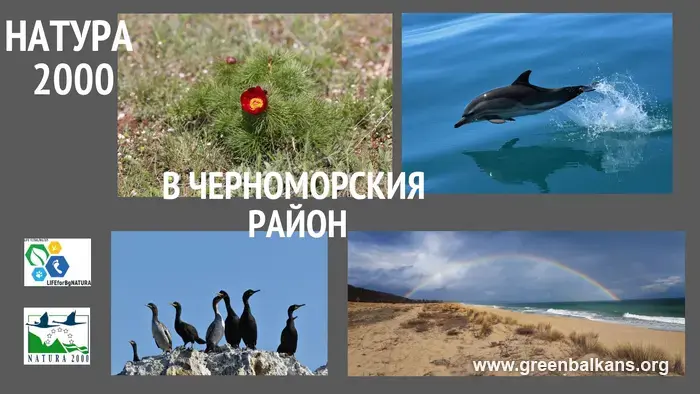
One of the main priorities of the EU Member States is the nature conservation and Natura 2000 protected areas network is at the core of the nature conservation and biodiversity policy. Natura 2000 is a protected areas network, established in compliance with the EU Birds and Habitats Directives. It covers 34.9 % of land and maritime zones in Bulgaria and covers 120 areas for wild birds protection and 234 protected areas for habitat conservation.
The Black Sea protected areas included in Natura 2000 are conserved over 40 different habitat types. They vary from estuaries, coastal lagoons and reefs, through steppes and grass communities to longose, Western Pontic Beech forests and silver linden (Tilia tomentosa) moesian forests.
Along the Bulgarian Black Sea coast there are over 30 protected areas which are included in Natura 2000. There are many territories of course that are of crucial importance for birds conservation, for other species or entire ecosystems. As a result, the protected areas overlap partially or entirely each other.
The major threat for insects, reptiles, mammals and birds survival comes from the disappearance of habitats due to construction, deforestation, draining of wetlands or intensive agriculture.
Larger area of the Black Sea coast is covered with long, wide strips of silver beaches and low sand dunes, slightly descends to the sea that does not know any tides.
Until the 1960s, the sea has given rich catch and provided food for economically important species that regularly migrate here from the Mediterranean. But fish stocks have since collapsed through a combination of overfishing, pollution and the invasion of alien species. Despite these serious threats, the Black Sea Region remains a vitally important refuge for wildlife, especially during the bird migration period.
The cliffs are also an ideal vantage point for witnessing the spectacular autumn migration of millions of birds - long the Via Pontica – the second largest bird migration route in Europe. Behind the shoreline, a series of coastal lakes, marshes and lagoons are strategically located to act as stepping stones for these birds. Wintering populations typically build up from late November and reach a peak during mid January to mid-February.
Natura 2000 conserves these unique Bulgarian coastline areas of importance to number of species on the land and in the sea.
To get to know them together and appreciate the natural richness of the Black Sea region you could read interesting facts about that in our Facebook page, Instagram #Natura2000BlackSeaCoast
For contacts:
Elena Stoeva – Project Manager Mobile: 0887574699, etilova@greenbalkans.org