

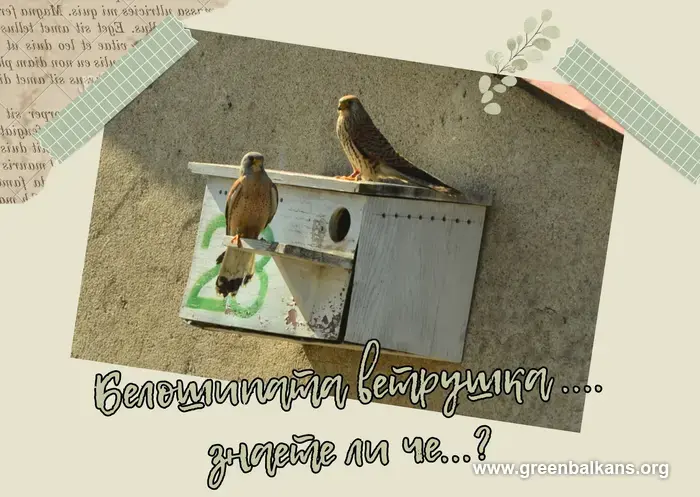
It's month May! This is one of the most dynamic months for the graceful falcons.
The Lesser Kestrels, do you know:
The month of May is the time when the home of the Lesser Kestrels - the artificial nests - is filled with activity;
The females lay most of their eggs during this month and undertake take up the exhausting and responsible brooding;
The eggs do not appear at the same time, but at an interval of a day and a half, or two days;
Brooding begins only after the laying of the last egg in the hatch and lasts about 28 days;
The eggs are brownish, mottled with lighter or darker rust-brown dots;
Most often, the eggs are brooded by the female, but in not so rare cases the male partner also participates in the process, some male birds are quite a bit more engaged and they change their partner much more often, so that she can feed, hunt and rest;
Usually, the male bird does not roost in the nest, but somewhere in the vicinity of the colony;
While brooding the eggs, the caring mother regularly turns them, arranges them, airs them and even slightly moistens them with the pores of her skin;
For this reason, the breast of the brooding birds is quite often devoid of feathers, and the spot is called a "blurred spot" and provides better contact between the eggs and the brooding parent's skin;
At the end of this month, the first chicks are hatched;
And how do the little Kestrels hatch and how their parents care for them – expect a continuation of our column next month!
