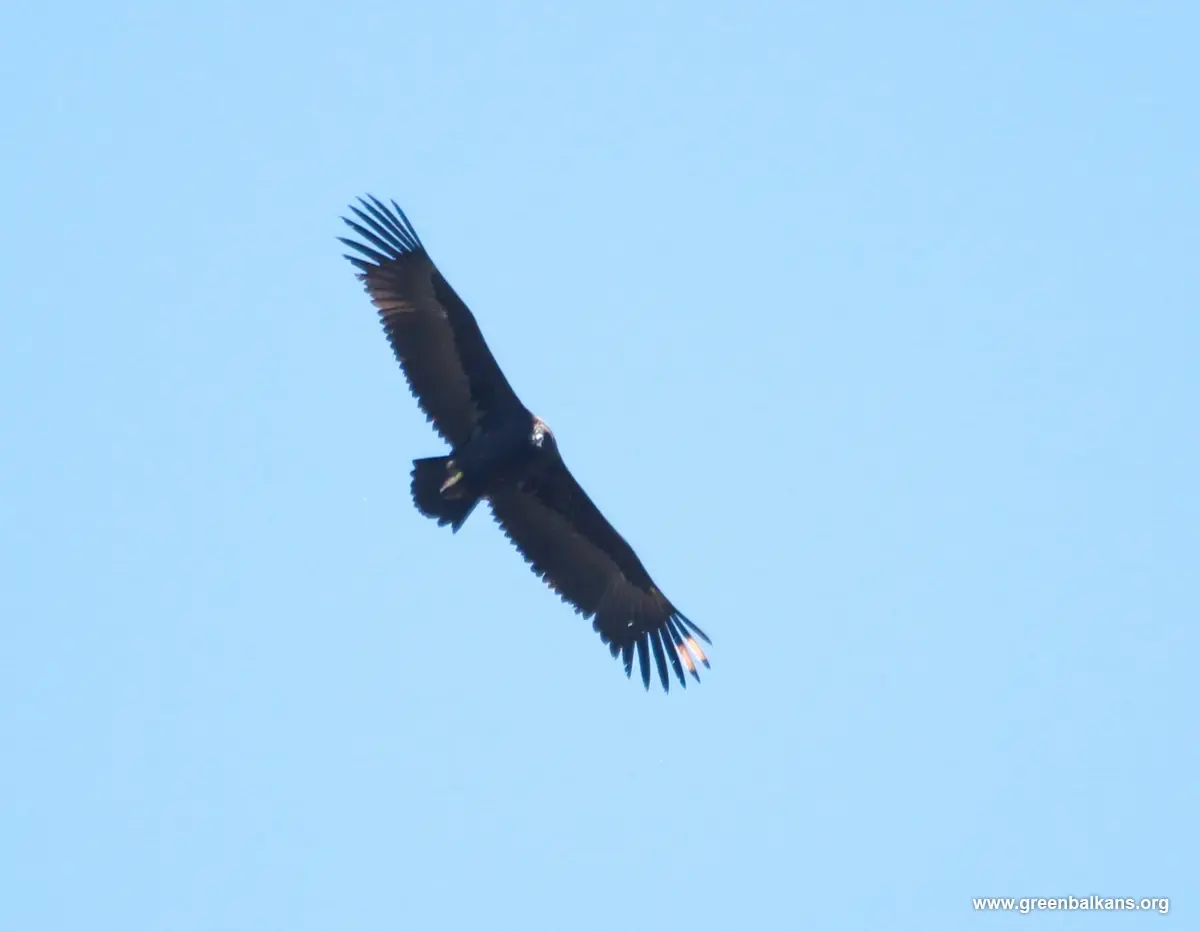
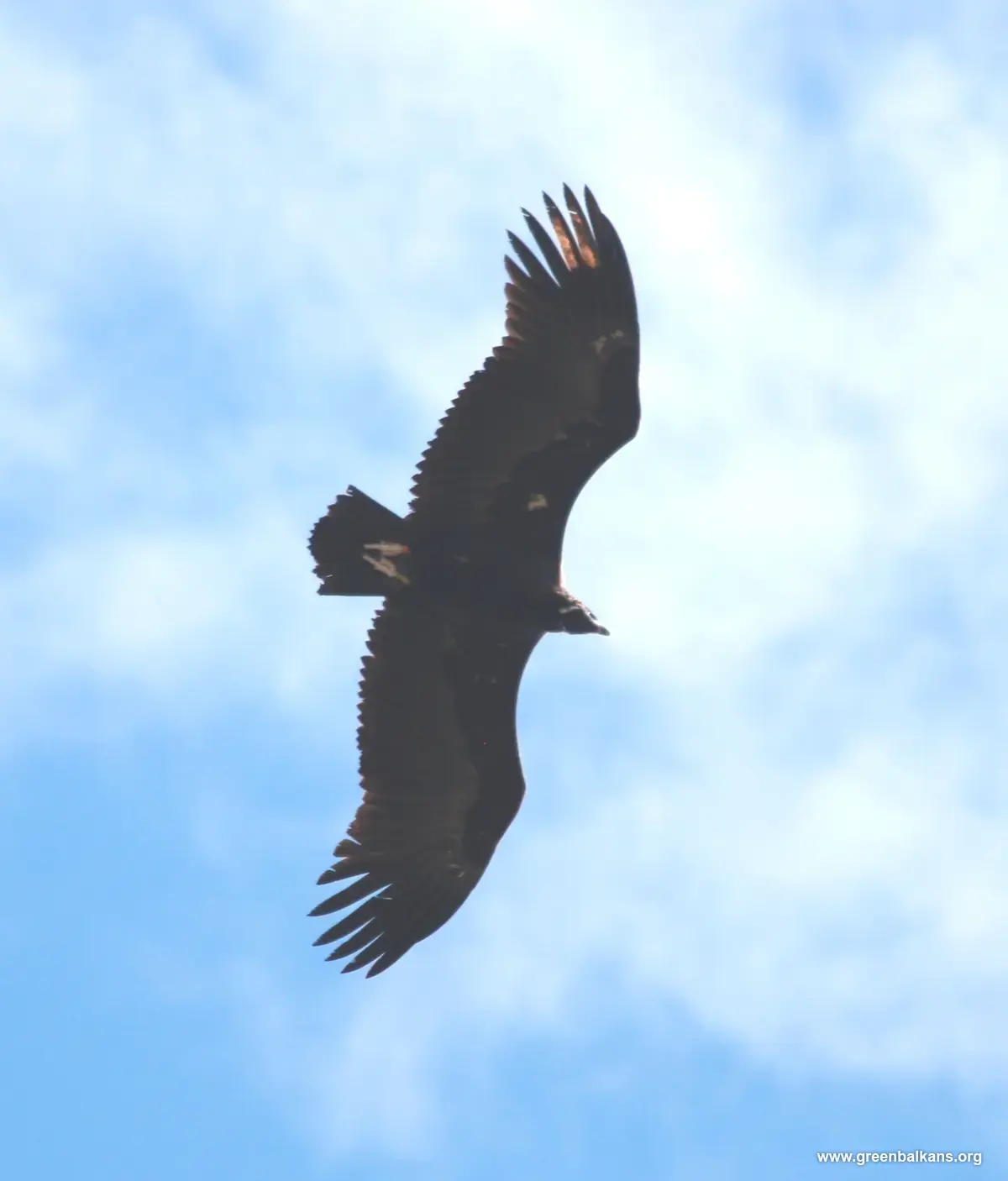
Months have passed since Riga, Boyan, and Ostrava, the first three Black Vultures reintroduced in our country since the species was declared extinct as a breeding species on the territory of Bulgaria in the 1980s made their first attempts to fly. What happens to them?
Exploring the Kotel Mountains
Boyan, the oldest of the three released black vultures, is the most independent and adventurous and takes increasingly long flights over the mountains around Kotel. While Ostrava and Riga, who is the youngest of the three captive-bred birds, stay close together and gain confidence in their flying skills by taking shorter flights and exercising their flight muscles. Since they first flew out, none of the birds have returned to the hack and prefer to spend the night separately. Ostrava and Riga preferred resting places for local griffon vultures, where a wild black vulture (probably from the colony in Dadia, Greece) also roosts, which recently visited the area. Boyan is more restless and chooses different places to rest, including a place in the rocks where griffon vultures often roost.
The three birds are equipped with GPS transmitters and can be detected at any moment. The Green Balkans and FWFF team constantly monitor the birds to make sure they are eating well and interacting well with each other and with other wild and domestic animals. The first month is crucial for the birds, who, although they have already taken their first flight, are not yet fully capable of flying and finding food on their own. In case a special situation arises, our team is ready to act immediately.
Finding food
The team of the project “Bright future for the Black Vulture” regularly places food - rabbits, goats and sheep, buffaloes, cattle, horses, offal, but mostly domestic pigs - in several places near the place of release of the birds in the mountains around Kotel. Ostrava and Riga are often seen feeding among the many Griffon Vultures. In addition to feeding with the other birds, Boyan is the first of the three birds to independently find food, having been spotted with Griffon Vultures feeding from a wild source. All three birds are doing well and gaining confidence as they adapt to their new environment and foraging. We'll keep you updated on their progress over the coming weeks and months.
Latest news from 21/09/18
These majestic photographs of the birds were taken by Emilian Stoinov and show the growing confidence of the three birds in flight.
“Bright future for the Black Vulture”
Managed by Green Balkans, in cooperation with the Fund for Wild Flora and Fauna and partners from Bulgaria, Spain and Germany, the project “Bright future for the Black Vulture” aims to reintroduce the Black Vulture in Bulgaria. The team will transport and release nearly 60 birds, some of them captive-bred, most from wildlife rehabilitation centers in Extremadura (Spain), in Bulgaria, it will also create additional feeding sites, increase wild grazing livestock populations, improve nesting conditions and create artificial nests, and remove some of the main threats to vultures in the country, such as the isolation of electrical poles and illegal use of poisons in the wild.