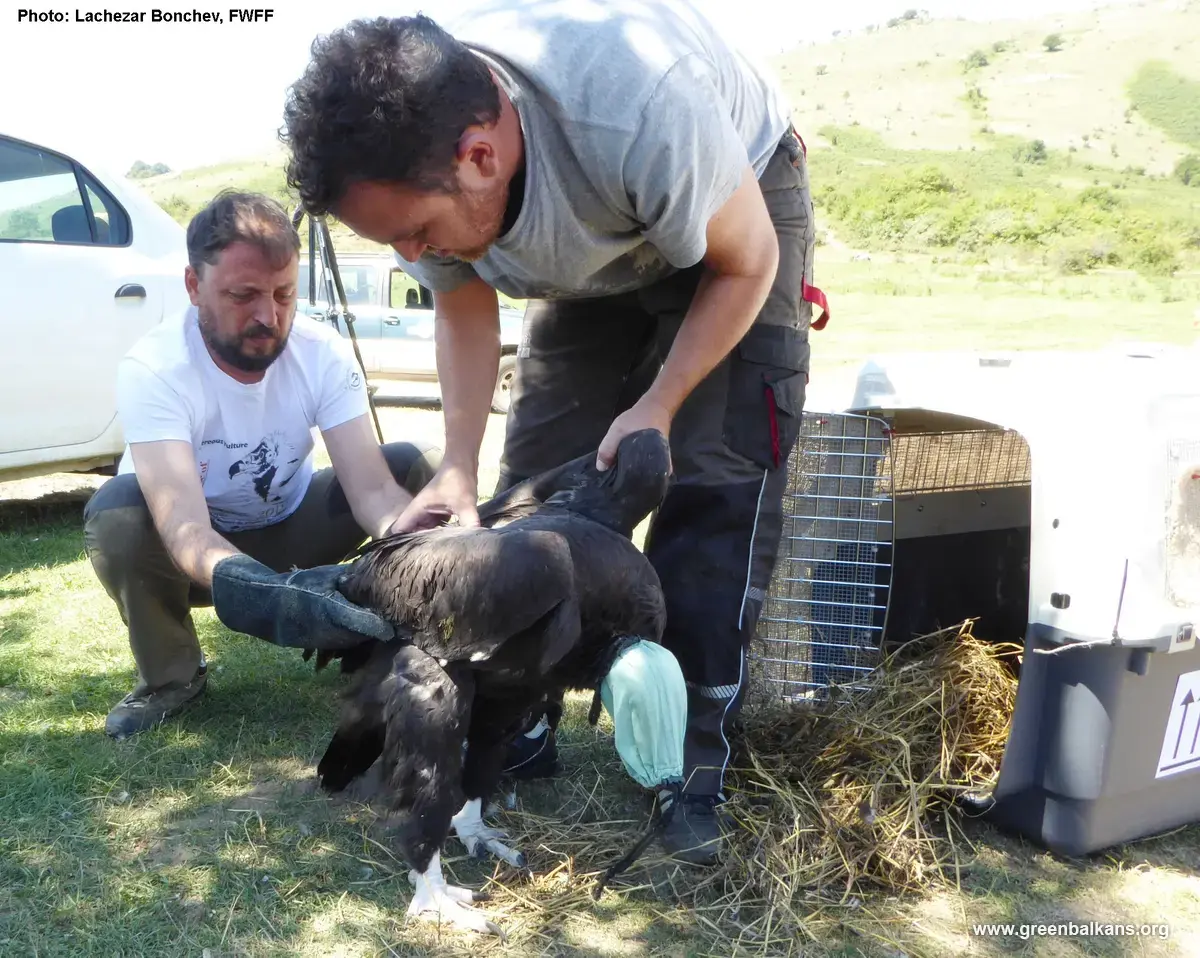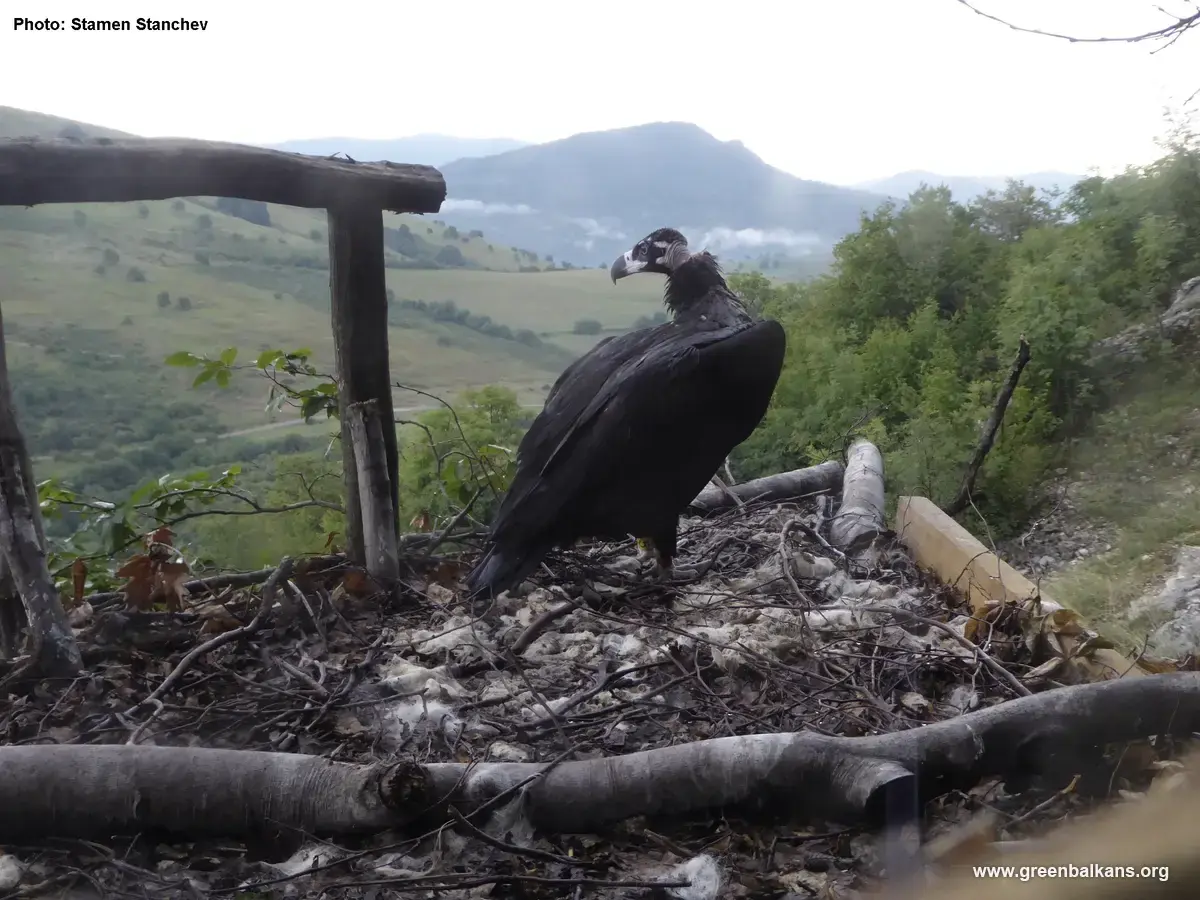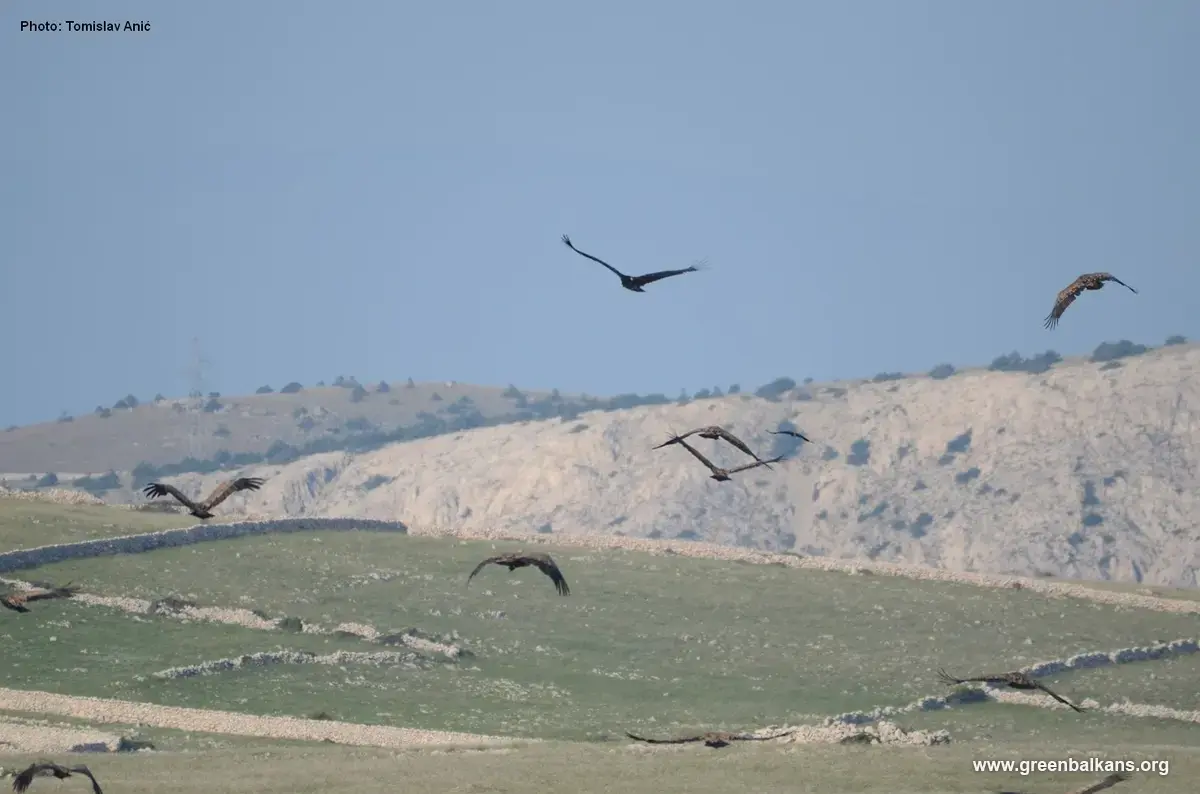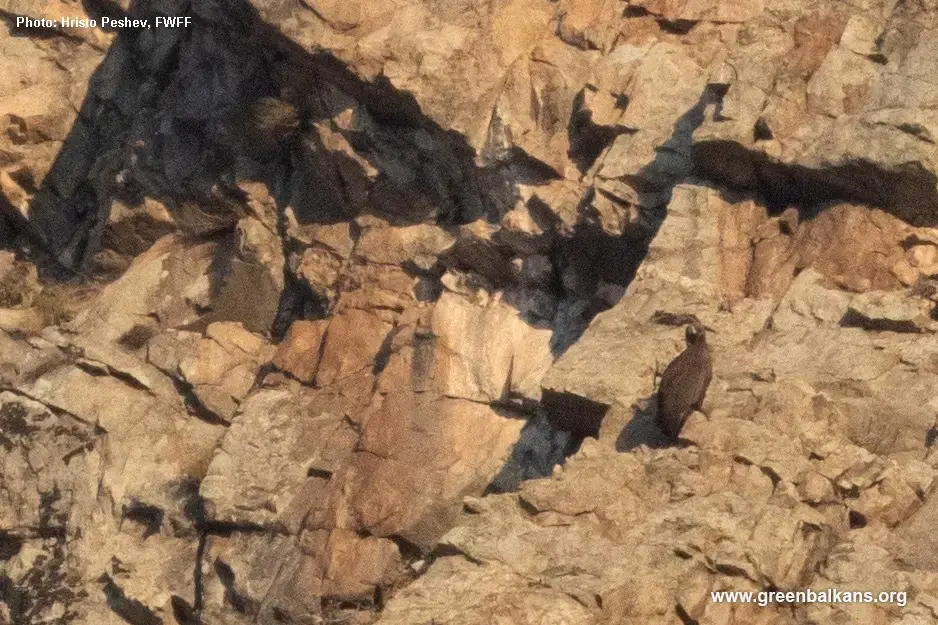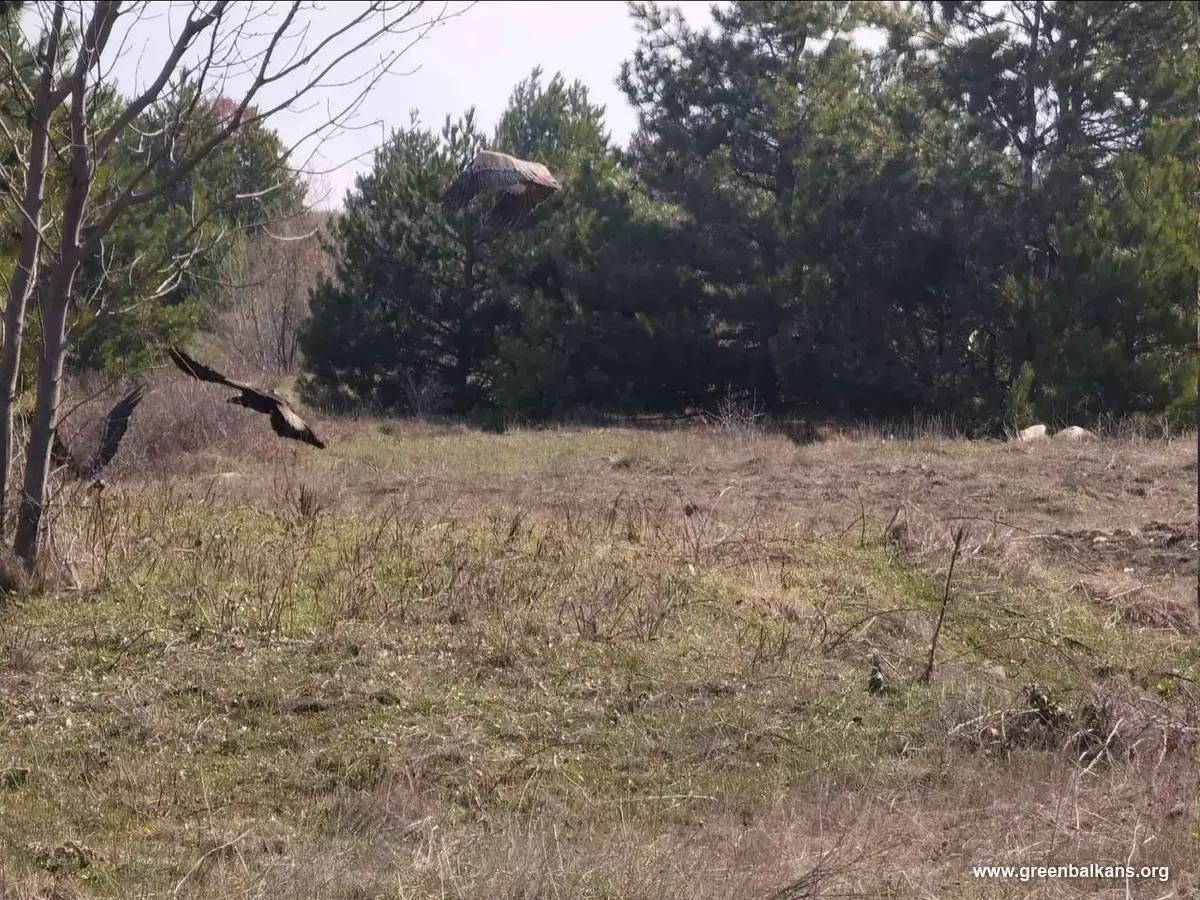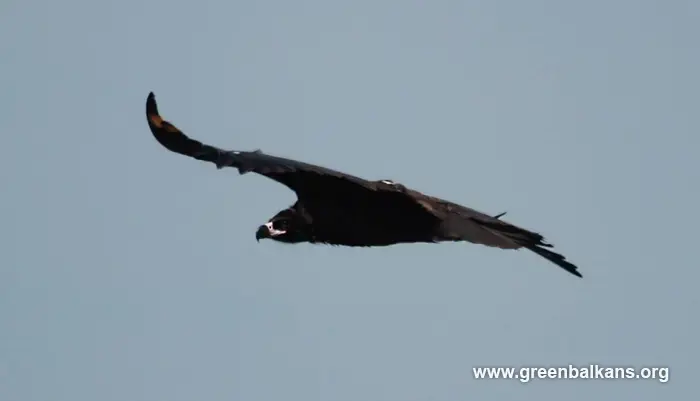
After a long absence from Bulgaria, on March 30, Riga was spotted back home again. Along with other five Griffon Vultures and another Black Vulture, Riga was seen in the area of village of Dripchevo, in Sakar Mountain where the group was feeding on the remains of dead cattle.
Do you remember the Black Vulture Riga, who along with Boyan - another Black Vulture, was donated to the “Bright Future for Black Vulture” project from the zoo in Riga, Latvia? Riga, Boyan and Ostrava are the first Black Vultures released into the wild in Bulgaria from an artificial nest through hacking method in the summer of 2018. Since then, our team is closely monitoring and regularly informing you about their stories and adventures around the world. Unfortunately, the other two released birds did not return to Bulgaria - the Vulture Ostrava was found poisoned in Greece in early 2019 and Boyan settled in Turkey.
A brief reminder of the wanderings of the traveler RigaGreece
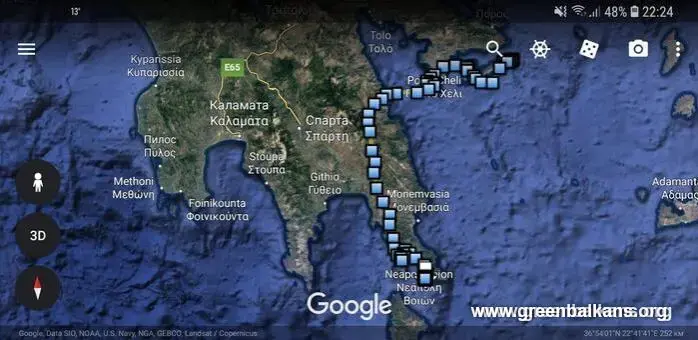
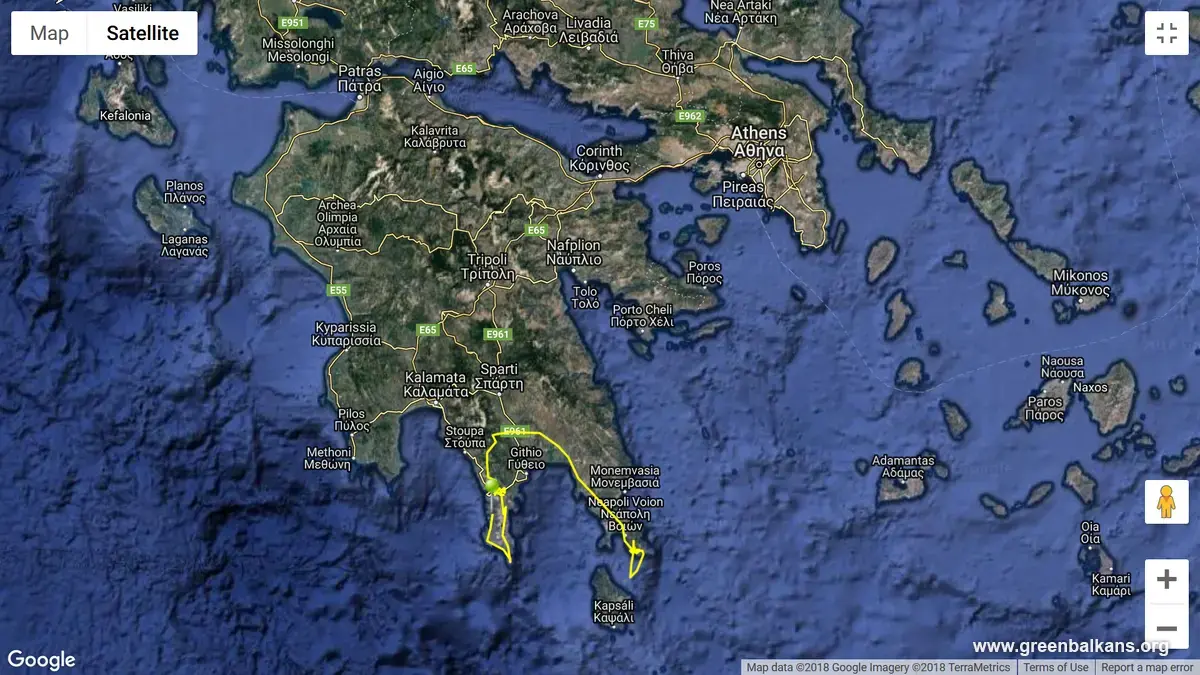
After her release near Kotel on 25.07.2018 and short adaptation period in the area, the young vulture bravely took the road. In October 2018, heading to Macedonia, Riga’s satellite transmitter was detected near Veles and the Vardar River. A few days later, the bird continued flying to south and was already in Greece, 30km from the border with Macedonia. Moving to Athens, she reached the Peloponnese. Quickly adapting to the local conditions, Riga spent the winter in the Mesolonghi area along with other local vultures.
Riga in the Alps
In the spring of 2019, from Southern Greece Riga took direction to north and traveled the whole 257 km for one day only passing above Albania. The young vulture roosted one night in Kosovo, after than it was observed along with local Griffon Vultures in Uvac Special Nature Reserve, Serbia. On April 24, Riga returned in Bulgaria for a short time.
The Black Vulture spent the summer of 2019 in the Alps, mostly in Austria, where she stayed for 3 months and a half. From there, the young traveler headed to south searching a warmer place to spend the winter. The bird passed over Slovenia and Croatia and stopped for a short stay in Bosnia and Herzegovina.
Risk of poisoning in Greece
During all this time, the project team hasn’t stop tracking the route of Riga thanks to her GPS transmitter. These journeys show that in the first few years of their lives, young Black Vultures roam and it is extremely important for us to follow their flights. In early February 2020, spending a second winter in Greece, Riga was at the center of a mass poisoning incident of vultures. Nine Griffon Vultures were found dead and two others were found helpless in the Messolonghi area. Fortunately, just at the time of the incident, Riga was moving north near Embesos (about 60 km from Messolonghi). According to local shepherds, she had joined a group of 30 Griffon Vultures spotted in the area, which protected half of the vulture population in Western Greece, while the poisoning incident was still active in Messolonghi. The team of Fund for Wild Flora and Fauna (FWFF) was in constant contact with local authorities, tracking Riga's movements to secure the bird's safety and help the local team find the poisonous bate. This case once again shows the key role birds with GPS transmitters play for the timely response in similar cases and coordinated actions needed to protect the remaining birds alive, as well as the need of warning the local authorities and prosecutors on time in order to have a real chance to catch the criminals. The wanderings of this young Black Vulture prove us that vultures have no borders and their protection depends of the common efforts of all Balkan countries.
From Bulgaria back to the Alps
After 19 months of wandering, Riga returned to her hatching site near Kotel. What was interesting for the project team was the possibility that Riga would have a potential partner, as she was observed spending some time with another young Black Vulture in the area of Mesolonghi. Unfortunately, our expectations that Riga will start nesting in the region of Stara Planina Mountain did not come true. In early summer the bird flew north to Romania, but quickly returned to the south and after following a visit to the other vulture adaptation aviary in Vrachanski Balkan Nature Park, Northwestern Bulgaria, passed Macedonia, Croatia and Slovenia to finally reach again the Hohe Tauern National Park in Austria. The transmitter she carried on her back regularly was sending update on her location, so our Austrian colleagues were also able to follow her flight. Furthermore, the bird has been seen several times and was even photographed on the territory of the park. We are very grateful to the photographer Richard Straub, who has kindly provided the photos from the bird’s stay in the park.
Returning in Bulgaria
The news from the end of March of Riga’s returning in Bulgaria gives us a new hope that finally the young Black vulture will settle in the region and after reaching the age of maturity will find favorable conditions to start nesting in the area. This will be the next major step for the “Bright Future for Black Vulture” LIFE14 NAT/BG/649 project under which the bird has been released. We are looking forward to the next adventures of the young vulture Riga, about which we will keep you fully informed.
Contacts:
Ivelin Ivanov – “Bright Future for Black Vulture” LIFE14 NAT/BG/649 Project Manager
Mob.number:+359887589995, email: iivanov@greenbalkans.org